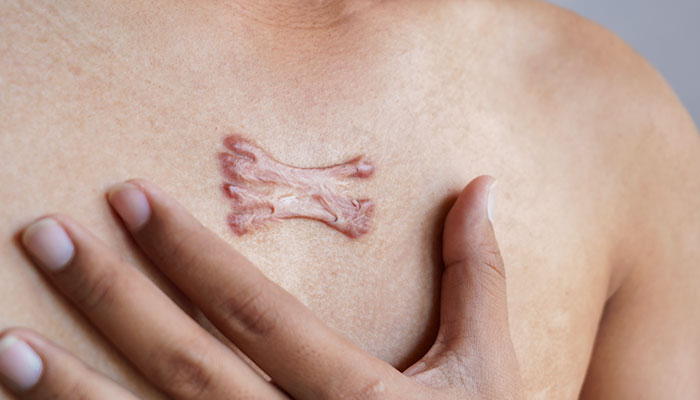
For keloid treatment, a variety of lasers are used, each with a specific function to address different aspects of the scar. The choice of laser depends on the keloid’s characteristics, such as its age, size, and color. These advanced therapies are a core part of modern keloid treatment in Islamabad.
Pulsed Dye Laser (PDL)
The Pulsed Dye Laser (PDL) is one of the most widely used and effective lasers for treating keloids and other vascular skin conditions. It works by targeting the blood vessels within the scar tissue. Keloids are highly vascular, meaning they contain an abundance of tiny blood vessels that supply them with oxygen and nutrients, contributing to their raised, reddish appearance.
How it works: The PDL emits a concentrated beam of yellow light at a specific wavelength (585 nm or 595 nm) that is absorbed by the hemoglobin in red blood cells. This absorption causes the blood vessels to heat up and collapse, effectively cutting off the blood supply to the keloid. This process, known as photothermolysis, starves the scar of the resources it needs to grow. As a result, the keloid’s redness diminishes, and it begins to flatten.
Benefits:
- Reduces redness and itching: By targeting the blood vessels, the PDL significantly reduces the reddish-purple color of the keloid, making it less noticeable. It can also help alleviate the common symptoms of itching and pain.
- Induces collagen remodeling: The thermal energy from the laser can stimulate the body’s natural processes to break down and remodel the excessive collagen in the keloid, leading to a flatter and softer scar.
- Non-ablative: PDL is a non-ablative laser, which means it does not remove the outer layer of the skin. This leads to a lower risk of side effects and a quicker recovery time compared to ablative lasers.
Considerations:
- Multiple sessions are often required to achieve optimal results.
- PDL is most effective on newer, red keloids and may be less effective on older, paler scars.
Fractional CO2 Laser
The Fractional CO2 Laser is an ablative laser that is also highly effective for treating keloids, particularly those that are older, thicker, or have not responded to other treatments. Unlike non-ablative lasers, the CO2 laser creates microscopic channels or columns in the skin’s surface, vaporizing the scar tissue in a controlled manner.
How it works: The laser emits a high-intensity beam of light at a wavelength of 10,600 nm, which is absorbed by the water content in the skin cells. By targeting only a fraction of the skin at a time, it leaves the surrounding healthy tissue intact. This allows for faster healing and reduces the risk of side effects. The process of creating these micro-injuries stimulates the production of new, healthy collagen and promotes a more organized structure, leading to significant flattening and softening of the keloid.
Benefits:
- Effective for thick, mature keloids: The ablative nature of the CO2 laser allows it to penetrate deeper and remove a portion of the thickened scar tissue, making it a powerful tool for older, more stubborn keloids.
- Promotes new collagen growth: By creating microscopic wounds, the laser triggers the body’s natural healing response, leading to the formation of a new, healthier layer of skin and collagen.
- Versatile: The fractional CO2 laser can be used in combination with other treatments, such as steroid injections, to enhance their effectiveness.
Considerations:
- Because it is an ablative laser, there is a longer recovery period compared to non-ablative lasers. The skin may be red, swollen, and scabbed for several days.
- There is a higher risk of hyperpigmentation (darkening of the skin), especially in individuals with darker skin tones. A skilled professional is essential to minimize this risk.
Nd: YAG Laser
The Nd:YAG Laser (Neodymium-doped Yttrium Aluminum Garnet) operates at a longer wavelength (1064 nm) than the PDL and is often used for treating keloids, particularly in patients with darker skin tones, as it has a lower risk of causing post-inflammatory hyperpigmentation.
How it works: The Nd:YAG laser can penetrate deeper into the skin and can target both blood vessels and a wider range of chromophores, including melanin. Its long-pulsed mode can effectively heat the blood vessels and reduce vascularity, similar to the PDL, while its Q-switched mode can be used to improve the keloid’s pigmentation.
Benefits:
- Safe for darker skin types: Its longer wavelength makes it a safer option for patients with a higher risk of developing hyperpigmentation after laser treatment.
- Effective for both vascularity and pigmentation: It can address both the redness of a keloid and its potential discoloration.
- Versatile: It can be used alone or in conjunction with other treatments.
Considerations:
- Like other laser therapies, multiple sessions are usually needed.
- The effectiveness may vary depending on the specific characteristics of the keloid.
The Importance of a Combined Approach
It’s important to understand that laser therapy is rarely a standalone solution for keloid treatment. Dermatologists in Islamabad often use a combination of treatments to achieve the best results. For example, a doctor might use a PDL to reduce the vascularity of a keloid and then follow up with steroid injections to further flatten the scar. A CO2 laser might be used to reduce the bulk of a thick keloid, and then topical silicone sheets are applied for aftercare to prevent recurrence.
The successful treatment of keloids relies on a customized plan and the expertise of a professional who can choose the right type of laser and the most effective combination therapy. Patients should have realistic expectations and be prepared for multiple sessions to see a significant improvement.
No responses yet